Thursday, November 19, 2026

01AI & tooling in practice

Hands-on applications
Developer ToolsTechnical walkthroughblog.platypush.tech

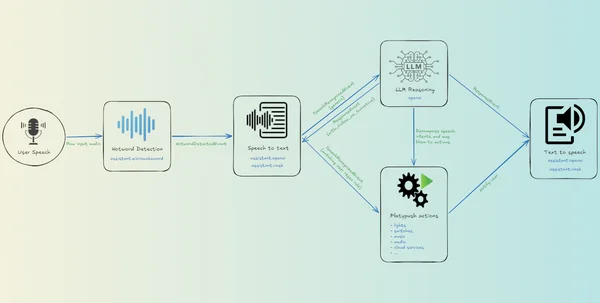
Rebuilding a local voice assistant pipeline

A developer's detailed walkthrough reconstructs a self-hosted voice-assistant pipeline, describing the choices involved in speech capture, recognition, command routing and response delivery. It is a practical counterpoint to cloud-only voice products: components can be swapped and profiled independently.

The value is in the engineering process and tradeoffs, not an independently measured claim that local assistants universally outperform hosted ones. Hardware, model choice and room acoustics affect results.
Publisher-provided image for Rebuilding a local voice assistant pipeline
Image: blog.platypush.tech
Author's walkthrough
Read full briefing Collapse briefing

Detailed briefing

What was done

The author documents the design of a local voice workflow and its integration points. The article provides a concrete starting point for comparing recognition and command-handling components rather than treating voice interaction as a single black box.

How to use the walkthrough

Read the pipeline description, identify the stages and substitute locally available components before measuring end-to-end latency and error rates. Exact hardware and software requirements should be taken from the original article; this briefing does not claim to have reproduced the setup.
Daily briefing

01Top stories

Primary intelligence

Solid 2.0 reaches stable with async reactivity

Publisher-provided image for Solid 2.0 reaches stable with async reactivity
Image: solidjs.com

Solid announced version 2.0 stable after a multiyear development effort. The release brings asynchronous operations into its fine-grained reactive graph and introduces server functions, streaming and diagnostics intended to make reactive behavior more inspectable. The project also describes a smaller API and a more integrated approach to coordinating client and server state.

For frontend teams, the important question is how these changes affect data fetching, optimistic updates and debugging. The release announcement establishes availability, not effortless migration or superior performance in every application.

Why it matters

A significant change to frontend asynchronous state architecture.

via Solid release
Read full briefing Collapse briefing

Detailed briefing

Async graph

Solid's fine-grained reactivity updates individual dependencies rather than rerendering entire component trees. Version 2.0 extends that approach to asynchronous values and server interactions.

Server and debugging work

The maintainers describe server functions, streaming and diagnostic features that make reactive state and execution easier to understand, including when agents produce code.

Migration considerations

Existing Solid applications should review API changes and test loading, error recovery and optimistic-update paths. The announcement alone cannot establish production reliability across all application architectures.

Limitations & caveats

First-party claims and migration unknowns.

02AI & tooling in practice

Hands-on applications
Developer ToolsInteractive demoalloyhtml.com

Alloy CSS builds a no-JavaScript invoice dashboard

A Show HN project presents a detailed fictional invoice dashboard built as a single HTML page using Alloy CSS without JavaScript. The working example includes menus, dialogs, tabs, invoice filters and form controls, with a source link on the page.

It is a useful experiment for evaluating declarative UI and progressive enhancement. The application uses made-up data, so it does not demonstrate backend persistence, authentication or real payment processing.

Working demonstration
Read full briefing Collapse briefing

Detailed briefing

The demonstration

The Ledger invoice example shows navigation, invoice states, a new-invoice dialog, tabbed content and filtering controls. The page explicitly says the app is fictional and links its source.

Reproduction and limitations

Inspect the example's source and Alloy CSS documentation, then test the interaction patterns with JavaScript disabled. The demo does not establish cross-browser accessibility or production readiness; those require separate testing.

Developer ToolsSource codegithub.com/vihren-dev

Belay explores Lean proofs for SQLite migrations

Belay is an experimental repository using Lean 4 to verify properties of SQLite schema migrations and queries. Its implementation and documentation make it an inspectable example of bringing formal methods into routine database maintenance.

The interesting application is checking migration invariants before production rollout. It does not establish complete SQLite semantics or that every schema change can be proved automatically.

Publisher-provided image for Belay explores Lean proofs for SQLite migrations
Image: github.com
Repository
Read full briefing Collapse briefing

Detailed briefing

Technical approach

The project models selected database migration and query behavior in Lean and expresses properties as proof obligations. This allows checking specified invariants rather than relying solely on test examples.

How to investigate

Read the source and examples, then try a small migration with a deliberately violated property. No independent execution was performed here, and unsupported SQL behavior or modeling assumptions may limit practical coverage.

Developer ToolsInteractive tutorialathrael.net

Interactive course teaches GPU inference mechanics

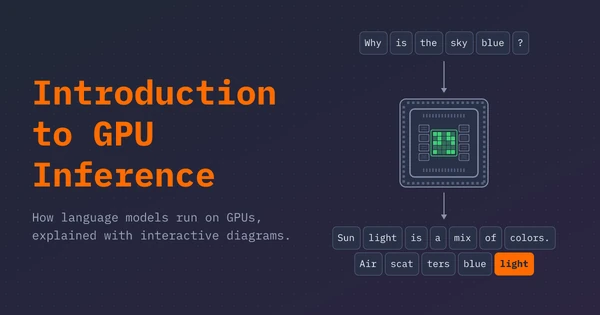
A short GPU inference course uses interactive diagrams to explain inference-serving concepts and their performance tradeoffs. The format lets developers explore ideas such as execution, batching and memory behavior visually rather than relying on static vendor claims.

It is educational material, not a benchmark or production serving framework. Its examples should be validated against real GPU workloads before making deployment decisions.

Publisher-provided image for Interactive course teaches GPU inference mechanics
Image: athrael.net
Working demonstration
Read full briefing Collapse briefing

Detailed briefing

What the course offers

The interactive web course presents inference concepts through diagrams and explanatory material. Readers can use it to develop a mental model of how serving decisions affect system behavior.

Practical use and limits

Work through the diagrams, then profile a representative inference service for latency, throughput and memory usage. The course was inspected online but no hardware benchmark was independently reproduced.

Monday evening incident and developer briefing

01Top stories

Primary intelligence

Jiff 1.0 stabilizes Rust timezone-aware datetime library

Publisher-provided image for Jiff 1.0 stabilizes Rust timezone-aware datetime library
Image: github.com

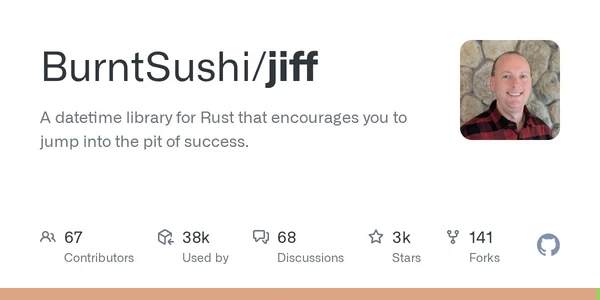
Andrew Gallant released Jiff 1.0 November 15, with civil/zoned time representations and DST-safe calendar operations; it already has adoption in Cargo, uv and Nushell. The practical significance depends on the specific technical mechanism and the independently established scope, rather than headline counts or vendor claims. The remaining evidence gaps are important when assessing operational consequences.

Why it matters

Mature timezone handling reduces persistent production correctness risks.

via Author's release essay & Repository
Read full briefing Collapse briefing

Detailed briefing

Why datetime semantics matter

Jiff 1.0 provides stable Rust APIs distinguishing civil calendar time from time tied to a zone. Calendar-day arithmetic can differ from adding 24 elapsed hours across daylight-saving transitions.

Migration considerations

The maintainer cites use in Cargo, uv and Nushell. Teams should test ambiguous local times, recurring schedules, serialization compatibility and timezone-data behavior before replacing existing libraries.

Limitations & caveats

Migration and timezone-data compatibility need assessment.

02Also worth knowing

Rapid scan briefs
Developer Toolsharmonic.fun

Aristotle introduces AI-assisted Rust formal verification

Harmonic announced Rust support for formal verification against specified properties, with vendor-reported examples that require independent assessment. This is a scoped development rather than evidence of a broader industry trend; practical consequences depend on deployment, adoption and independently verified results.

via Harmonic announcement
Read full briefing Collapse briefing

Detailed briefing

What is established

Harmonic announced Rust support for formal verification against specified properties, with vendor-reported examples that require independent assessment.

Interpretation and limitations

The reported development is worth monitoring, but the cited source does not establish every downstream outcome. Verify exact versions, access conditions and operational effects before relying on it in production or treating it as an industry-wide change.

Developer Toolsopencode.ai

OpenCode Browse draws developer attention

OpenCode Browse appeared in the HN front-page listings; evaluate its security boundaries and capabilities before production use. This is a scoped development rather than evidence of a broader industry trend; practical consequences depend on deployment, adoption and independently verified results.

via OpenCode
Read full briefing Collapse briefing

Detailed briefing

What is established

OpenCode Browse appeared in the HN front-page listings; evaluate its security boundaries and capabilities before production use.

Interpretation and limitations

The reported development is worth monitoring, but the cited source does not establish every downstream outcome. Verify exact versions, access conditions and operational effects before relying on it in production or treating it as an industry-wide change.

Developer Toolsgithub.blog

GitHub Copilot models scheduled for December retirement

GitHub will retire selected Copilot models on December 14; audit pinned model choices in coding workflows. This is a scoped development rather than evidence of a broader industry trend; practical consequences depend on deployment, adoption and independently verified results.

via GitHub changelog
Read full briefing Collapse briefing

Detailed briefing

What is established

GitHub will retire selected Copilot models on December 14; audit pinned model choices in coding workflows.

Interpretation and limitations

The reported development is worth monitoring, but the cited source does not establish every downstream outcome. Verify exact versions, access conditions and operational effects before relying on it in production or treating it as an industry-wide change.

03AI & tooling in practice

Hands-on applications
Developer ToolsSource codegithub.com/aryamandarda

tamserve: serving live multi-camera object tracking with shared GPU inference

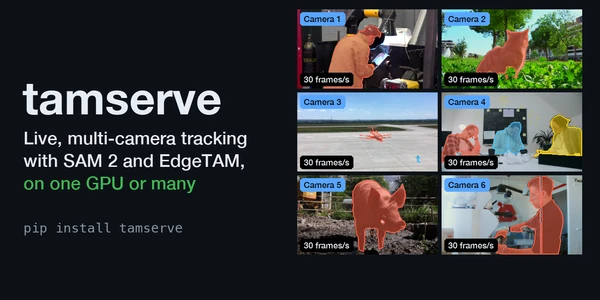
A developer published tamserve, an Apache-2.0 Python serving layer for SAM 2 and EdgeTAM that shares one model instance across live camera feeds instead of allocating a separate model for every stream. The repository contains executable camera-loop examples, tests, benchmarks, and recorded demonstrations. On the author's RTX 4090 tests, eight-camera EdgeTAM tracking consumed 2.2 GB of GPU memory versus 8.6 GB for the baseline, with similar segmentation accuracy. This is a practical architecture example for video analytics, robotics and streaming computer vision; the measurements have not been independently reproduced.

Publisher-provided image for tamserve: serving live multi-camera object tracking with shared GPU inference
Image: github.com
Source, examples and benchmarks
Read full briefing Collapse briefing

Detailed briefing

What the demonstration shows

The author documents live object masks across multiple camera streams and supplies a short recorded six-camera demonstration. An engine accepts frames from each stream and returns per-object segmentation masks, maintaining tracking state across calls. It supports box, click and mask prompts, with additional named-object tracking through a detector.

The serving architecture

The important idea is separating model serving from camera capture. Multiple streams share one GPU-resident model, and work can be batched rather than spawning a separate model per camera. The project includes code, tests and a benchmark directory; its comparison uses EdgeTAM on an RTX 4090 and reports substantial GPU memory savings. These are author-reported measurements, not independently reproduced results.

Reproduction and constraints

The documented Python API uses pip install tamserve and a frame-processing loop that passes the newest frame from each camera to engine.step(). The author recommends an NVIDIA GPU for live performance, though CPU experimentation is possible. Real-world results will depend on resolution, object count, camera count, decoding, GPU and tracking conditions.

Developer ToolsTechnical writeupblog.antonio.cx

lend: local approval for remote coding agents without sharing credentials

A November 13 technical writeup documents a remote-agent workflow using herdr, Ovis and lend. Claude Code and Codex run on remote virtual machines, while the developer keeps authenticated GitHub and cloud CLIs, SSH keys and 1Password credentials on a local laptop. A forwarded SSH-agent socket carries restricted command requests back to the laptop, where policy and biometric approval govern execution. The post includes concrete configuration, MCP integration, connection-recovery handling and a security analysis. It reduces credential copying but is not a sandbox for approved local commands.

Publisher-provided image for lend: local approval for remote coding agents without sharing credentials
Image: blog.antonio.cx
Hands-on technical walkthroughalso Source repository
Read full briefing Collapse briefing

Detailed briefing

The workflow

The author runs coding agents in disposable remote VMs and manages them through a terminal multiplexer and a browser or phone interface. Rather than copying credentials to the remote machines, lend forwards restricted requests through a proxy SSH-agent socket. The agent can request an authenticated GitHub CLI operation and receive the output after local approval.

Policies, MCP and reconnects

The writeup includes policy rules for executable paths, argument prefixes, SSH key fingerprints and approval requirements. Claude Code can call a local-command tool through lend's MCP server. A stable socket symlink is used so long-running agent sessions can recover after SSH reconnects. The author also documents leases, logs and hooks for remote permission prompts.

Threat model and caveats

Credentials remain on the laptop, but approved commands execute with the laptop user's permissions. Allowing a shell, interpreter or secret-printing command can defeat the intended boundary. Caller descriptions from the VM are untrusted, and anyone with access to the forwarded socket can submit requests subject to policy and approval. The tool is early-stage and its described security properties have not been independently audited here.

Developer ToolsInteractive demothingstudio.net

ThingStudio: visual flows and AI-generated MicroPython for microcontrollers

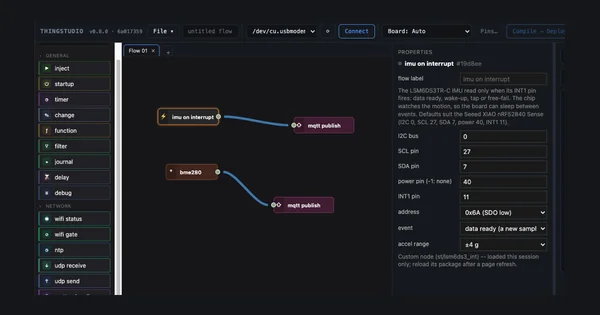
Mike Karliner demonstrated ThingStudio, an Apache-2.0 beta project that lets developers assemble event-driven microcontroller workflows visually and compile them into MicroPython. The site includes a browser demo, hardware examples and an AI-authoring approach: an assistant writes a structured flow, runs the compiler, corrects pin or node errors, and leaves a visual program a human can inspect. Supported targets include ESP32 and Raspberry Pi Pico families. Unlike a remote dashboard, the compiled flow runs on the board after deployment. Hardware coverage and usability are primarily maintainer-tested.

Publisher-provided image for ThingStudio: visual flows and AI-generated MicroPython for microcontrollers
Image: thingstudio.net
Interactive demo and technical overviewalso Browser editor demo
Read full briefing Collapse briefing

Detailed briefing

What the demonstration contains

The site demonstrates a blinking LED flow and lets readers try the visual editor in a browser without installing hardware tools. It also documents practical chains involving buttons, timers, sensors, MQTT and LEDs. Flow files are plain JSON, and the editor can compile them into MicroPython for deployment over USB or WiFi.

Why the AI workflow is different

Instead of asking an assistant for a monolithic script, the documented workflow asks it to produce a flow file using predefined nodes and connections. The compiler checks board definitions and pin conflicts, returning errors that can be corrected before deployment. The human can inspect the generated flow visually, which provides a reviewable intermediate representation between a natural-language request and device code.

Reproduction and limitations

The browser demo is available without an account; deploying to hardware requires a compatible MicroPython board and local setup. The author reports testing several ESP32, RP2040, RP2350, nRF52840 and STM32 boards. The project is explicitly beta, with incomplete independent hardware testing and potential rough edges in setup and documentation.

Sunday morning briefing

01Also worth knowing

Rapid scan briefs
Developer Toolsgithub.com

llama.cpp 1.0 milestone

Maintainers targeted November 13 for API cleanup and a milestone release. The original report could not verify that the final 1.0 tag shipped, so treat it as a target rather than a confirmed published release.

via Maintainer discussion

November 14 briefing · Reconstructed

01Top stories

Primary intelligence

AWS Emulator offers local infrastructure testing for coding agents

Publisher-provided image for AWS Emulator offers local infrastructure testing for coding agents
Image: aws.amazon.com

AWS Emulator runs AWS-compatible API calls on a local machine, enabling agents and integration tests to iterate without cloud deployments.

Why it matters

The faster feedback loop is especially relevant to automated debugging, infrastructure tests and CI.

via AWS launch & AWS documentation
More context Collapse briefing
Limitations & caveats

It is not an IAM security test and has service-specific fidelity limits.

02Also worth knowing

Rapid scan briefs

03AI & tooling in practice

Hands-on applications

Morning briefing · Reconstructed from original topics

01Also worth knowing

Rapid scan briefs
Developer Toolsgithub.blog

GitHub Actions announces ARM32 runner retirement

GitHub announced that Windows and Linux ARM32 job execution support will end on December 8, 2026.

via November GitHub changelog

Earlier Developer Tools coverage