Solid 2.0 reaches stable with async reactivity
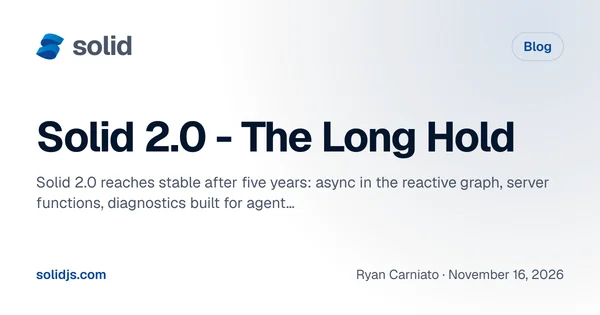
Solid announced version 2.0 stable after a multiyear development effort. The release brings asynchronous operations into its fine-grained reactive graph and introduces server functions, streaming and diagnostics intended to make reactive behavior more inspectable. The project also describes a smaller API and a more integrated approach to coordinating client and server state.
For frontend teams, the important question is how these changes affect data fetching, optimistic updates and debugging. The release announcement establishes availability, not effortless migration or superior performance in every application.
A significant change to frontend asynchronous state architecture.
Read full briefing Collapse briefing
Detailed briefing
Async graph
Solid's fine-grained reactivity updates individual dependencies rather than rerendering entire component trees. Version 2.0 extends that approach to asynchronous values and server interactions.
Server and debugging work
The maintainers describe server functions, streaming and diagnostic features that make reactive state and execution easier to understand, including when agents produce code.
Migration considerations
Existing Solid applications should review API changes and test loading, error recovery and optimistic-update paths. The announcement alone cannot establish production reliability across all application architectures.
Limitations & caveats
First-party claims and migration unknowns.