Thursday, November 19, 2026

Broadcom's November 19 VMware advisory leads today's security coverage: a critical vCenter authentication bypass has no workaround, and supported patches are available. The European Commission also confirmed that an AI-assisted cyberattack detected October 22 disrupted internal applications; most have recovered, but the investigation and some restoration work continue. Neither incident has a verified connection to other recent outages.

PostgreSQL 19 is the most consequential developer-platform release, adding online table repacking, planner advice and read-your-writes support for replicas. Anthropic began Nasdaq trading after its record-sized IPO, while Google published unusually detailed production data about Sashiko, its Linux kernel AI code-review service.

The practical-tooling section emphasizes reproducible or inspectable work: Sashiko's independent verification passes, browser-based weight-space experiments, lightweight local transcription and a self-hosted voice-assistant walkthrough. Earlier NGINX, Java4Shell and Python package supply-chain incidents still warrant patch and credential review. No representative new Staff-level engineering hiring dataset was verified.

01Top stories

Primary intelligence

Broadcom patches exploited critical VMware vCenter authentication bypass

Monitoring Track this incident

Broadcom issued VMSA-2026-0009 on November 19, patching five vulnerabilities across VMware vCenter, SDDC Manager and VMware Tools. The most urgent is CVE-2026-123890, a 9.8-rated VMware Directory Service authentication bypass that could let a network-reachable attacker obtain unauthorized vCenter access. Broadcom lists no workaround, making patched releases the primary defense.

The response matrix lists vCenter 8.0 U3m, 9.0.2.0200 and 9.1.1.0200 among fixed versions. Separate reporting says Google/Mandiant identified earlier exploitation by a suspected espionage actor, but the scale of compromise is not established.

Why it matters

A network-reachable management-plane authentication bypass can compromise control of an organization's virtual infrastructure.

via Broadcom advisory & VMware FAQ
Read full briefing Collapse briefing

Detailed briefing

Management-plane exposure

vCenter controls virtualization hosts, virtual machines and administrative operations, so compromise of its authentication boundary can have effects beyond a single workload. Broadcom describes the vulnerable component as VMware Directory Service and specifies network access to the affected vCenter service as the prerequisite. The advisory also includes separate SDDC Manager SQL injection, command injection and privilege-escalation issues, plus a VMware Tools SAML signature bypass. These are distinct vulnerabilities and should not be conflated with the authentication bypass.

Fixed versions and response

Broadcom's November 19 response matrix lists fixes for vCenter 8.0 and supported 9.x and Cloud Foundation branches, with special support guidance for vCenter 7 under extended support. The critical authentication bypass has no published workaround. Operators should identify affected management appliances, restrict management-network exposure where possible, apply the exact vendor patch for their branch and review authentication and administrative activity for anomalies.

Exploitation and uncertainty

Google Threat Intelligence and Mandiant reportedly observed exploitation before public disclosure and described tooling associated with a suspected espionage actor. That account increases urgency but does not establish the number of affected enterprises. The first-party advisory confirms the vulnerability and remediation, not the broader campaign attribution. A detailed independent account of affected victims and completed patch deployments remains unavailable.

Limitations & caveats

The full scope of observed exploitation and patch adoption is unknown.

European Commission confirms AI-assisted cyberattack, with some applications still offline

Investigating Track this incident

The European Commission confirmed November 19 that an AI-assisted cyber campaign detected October 22 prompted it to take several internal applications offline. Most services have been restored, but some tools remain unavailable, and the investigation is continuing. Officials confirmed misuse of AI tools without identifying the attacker or detailing how the intrusion occurred.

Politico reported possible exposure of personnel information and disruption to administrative systems, but the Commission has not corroborated those details. Its spokesperson said there was no evidence of a breach affecting Commission staff as a whole; that is not a guarantee that no individual records were exposed.

Why it matters

A major public institution confirms real service disruption and AI-assisted attacker activity, while data exposure remains under investigation.

via Reuters & Associated Press
Read full briefing Collapse briefing

Detailed briefing

Incident and reporting timeline

The Commission says it detected the campaign on October 22 and launched an investigation and preventive shutdowns. It publicly confirmed the AI-assisted nature of the campaign November 19. The reported operational disruption lasted beyond the initial detection, but officials did not provide a complete per-application outage timeline. Publication date should not be confused with the incident's October occurrence.

Operational and data impact

Several internal applications were deliberately taken offline as a protective measure, and most were subsequently restored. Reports describe possible effects on translation, payroll, timesheets and reimbursement systems, but the Commission declined to confirm those specific systems. It also said it had found no evidence of a staff-wide data breach. The unknown number of affected individuals and remaining offline tools prevent a definitive blast-radius estimate.

What AI involvement establishes

Officials described the campaign as involving AI tools, but did not publish a reproducible technical chain or identify a particular agent or model. AI-assisted vulnerability discovery does not itself demonstrate autonomous end-to-end exploitation. The investigation is open, and claims about the attacker's identity, initial access and stolen records remain unverified.

Limitations & caveats

No verified attribution, technical entry point or comprehensive breach assessment.

PostgreSQL 19 ships online repacking, plan advice and replica read-your-writes

Publisher-provided image for PostgreSQL 19 ships online repacking, plan advice and replica read-your-writes
Image: postgresql.org

The PostgreSQL Global Development Group released PostgreSQL 19 on November 19. The release adds `REPACK (CONCURRENTLY)` for reclaiming table bloat without blocking normal reads and writes, `pg_plan_advice` for influencing planner choices, and `WAIT FOR LSN` to support read-your-writes consistency on standbys. Developers also gain `INSERT ... ON CONFLICT DO SELECT` for get-or-create patterns and JSON output from `COPY`.

Other changes include parallel autovacuum index processing, improved replication behavior, more I/O observability and default JIT disabling. These are substantive operational improvements, but teams should benchmark workloads and validate extension compatibility before upgrading.

Why it matters

Core database maintenance and consistency improvements reduce downtime and application workarounds.

via PostgreSQL official release
Read full briefing Collapse briefing

Detailed briefing

Maintenance without long exclusive locks

The new REPACK operation reclaims space and can reorder table data, while its CONCURRENTLY mode is designed to keep normal reads and writes available. This addresses a familiar tradeoff with VACUUM FULL and CLUSTER, which remain for compatibility. Autovacuum gains parallel index processing and workload-priority scoring, while additional statistics views expose locks, recovery and vacuum priorities.

Planner control and replica consistency

The pg_plan_advice extension provides a way to influence query plan selection and store advice for repeat use, helping teams respond to regressions without rewriting application SQL. WAIT FOR LSN lets a standby wait until it has replayed a specified write-ahead log position before a dependent read, addressing the classic lag-induced read-your-writes problem. Logical replication also gains sequence-value support and simpler WAL-level setup.

Developer ergonomics and migration considerations

INSERT ON CONFLICT DO SELECT returns an existing conflicting row, simplifying get-or-create round trips. COPY gains JSON output, window functions gain IGNORE NULLS, and foreign-key checks and NOT IN planning receive optimizations. JIT is now disabled by default because its cost estimation proved unreliable. Operators should test extension compatibility, SQL semantics, query plans, replication behavior and rollback procedures before production upgrades.

Limitations & caveats

A major-version upgrade still requires extension, compatibility and workload testing; vendor benchmarks are not universal.

Anthropic begins public trading after record $81 billion IPO

Anthropic's shares began trading on Nasdaq November 19 under ANT following an approximately $81 billion IPO priced at $83 per share. Reuters reported the shares closed at $97.17, around 17% above the offer price, after a stronger opening. The company's public debut follows years of unusually large private capital commitments to frontier AI.

The milestone changes transparency and capital-market access, but does not resolve questions about model training expense, inference margins or future compute commitments. Broader technology stocks fell during the session despite the high-profile debut.

Why it matters

Public-market reporting exposes frontier-model economics and financing assumptions to broader scrutiny.

via Reuters trading report & Reuters IPO analysis
Read full briefing Collapse briefing

Detailed briefing

What changed since the pricing announcement

November 18 coverage established the $83 offering price and expected November 19 listing. Today's material update is that trading began and the first session closed at $97.17. The IPO raised roughly $81 billion, while valuation figures vary depending on whether outstanding or fully diluted shares are counted. Those distinctions matter when comparing the company with publicly traded peers.

Economics under public scrutiny

Anthropic's rapid enterprise and coding-tool growth is paired with significant infrastructure investment. Public financial disclosures can clarify how much revenue is recurring, what compute costs are borne by the company and how cash consumption evolves. Neither a large raise nor a strong first session proves that the cost of training and serving frontier models has become sustainable.

Broader market signal

Reuters reported broad US equity declines during the same session, including weakness in semiconductor and cloud names, despite enthusiasm around Anthropic's debut. Investors appear to be separating company-specific demand from uncertainty about AI infrastructure spending and valuations. First-day volatility is a poor predictor of long-run performance, and the market reaction should not be treated as a verdict on AI technology.

Limitations & caveats

First-day share movement is not evidence of durable AI profitability.

Google describes Sashiko's real-world Linux kernel agent code-review results

Publisher-provided image for Google describes Sashiko's real-world Linux kernel agent code-review results
Image: cloud.google.com

Google published a November 19 engineering account of Sashiko, its open-source Gemini-powered Linux kernel code-review system. It reports roughly 1,200 reviews daily across more than 100 mailing lists, with over 70 lists opting into review emails. The architecture separates specialist passes for different bug classes from independent verification of disputed findings and even questionable dismissals.

Google reports Sashiko citations in more than 2,000 mainline commits and 500 kernel CVEs this year. It also observed lower subsequent fix rates after rollout, while explicitly cautioning that many other factors could explain the change.

Why it matters

A deployed AI review system offers rare operational measurements and a reproducible architecture for validating code changes.

via Google Cloud engineering writeup & Sashiko source
Read full briefing Collapse briefing

Detailed briefing

Specialists and verification

Sashiko gathers code around a proposed diff, including relevant callers, structures and subsystem notes, then launches up to seven focused review sessions. They separately investigate intent, control flow, resource lifetimes, locking, security and hardware interactions. Each records not only suspected defects but also concerns it investigated and dismissed. A lead verifier audits both lists and sends ambiguous claims to independent per-bug verification agents, requiring code evidence rather than speculation.

Production data and developer feedback

Google says the system completes around 1,200 reviews a day, with more than 1,500 kernel developers having replied to its reports. It cites more than 2,000 mainline commits and over 500 CVEs that mention Sashiko. The reported 60-day follow-up fix rate fell from a historical 3.4% to 2.2% for a later release, but this before/after comparison is observational. Changes in release mix, review culture and reporting practices may contribute.

Reproduction and engineering implications

The project is open source, with review traces and prompts made public. Its most transferable design principle is to require independent evidence for both positive bug findings and dismissals, rather than treating model confidence as proof. Running similarly deep reviews can be costly: Google funds the public service, and the system averages extensive repository tool use. It complements rather than replaces experienced maintainers.

Limitations & caveats

Reported outcome correlations are not causal proof that the agent reduced bugs.

02Also worth knowing

Rapid scan briefs
Securityvirtualizationreview.com

CISA flags exploited LiteLLM and legacy software vulnerabilities

CISA added four vulnerabilities to its Known Exploited Vulnerabilities catalog November 18, including a LiteLLM sandbox escape, Apache Axis, REDCap and Synology flaws. Inclusion reflects evidence of exploitation, not a shared attacker or a common incident.

LiteLLM operators should review exposure of the custom-code guardrail testing endpoint and the project's patched version guidance. The affected endpoint is especially relevant to organizations centralizing access to AI models.

via Technical reporting
Read full briefing Collapse briefing

Detailed briefing

Affected surfaces

The reported LiteLLM flaw involves escaping a Python sandbox through custom guardrail testing functionality. The other entries affect older Java web services, a research-data platform and NAS software. They represent distinct technical conditions and require product-specific patch decisions.

Prioritization

A KEV entry is a stronger exploitation signal than an unexploited CVE score, but it does not provide a victim count. Teams should prioritize internet exposure and sensitive credentials, verify vendor fixes and review suspicious access logs.

AI & Researchanthropic.com

Anthropic reports AI-assisted progress on two black-hole physics problems

Anthropic published a technical account of Claude Fable 5.2 assisting with two theoretical-physics problems, including a calculation related to the Hawking–Page transition and an exact bound in a simplified modular-bootstrap setting. The work used multiple agent sessions and independent checks, and the company links research preprints.

One mathematical result was formally checked with Lean, according to the authors. These are bounded results in theoretical models, not proof of a general solution to quantum gravity.

via Anthropic research
Read full briefing Collapse briefing

Detailed briefing

Research workflow

Anthropic describes parallel agents exploring numerical patterns, relevant literature and analytical methods, with cross-checks and physicist review. One agent's spectral-curve observation became the basis for a proof of an optimal bound in the chosen modular-bootstrap setting.

Evidence and scope

The account links preprints and reports Lean verification for part of the work. Expert peer scrutiny and replication remain important, and the results apply to specific mathematical formulations rather than all physical black holes.

AI & Developer Toolsblog.google

Google demonstrates Gemini 4 Neon applications in Blender and WebGL

Google's Gemini 4 Neon release article includes concrete demonstrations of an agent operating Blender through MCP, generating a WebGL2 ski simulator and constructing a spreadsheet image effect using formulas rather than embedded pictures. These examples are more informative than benchmark charts because they expose the kinds of multi-tool artifacts the company is testing.

They remain vendor demonstrations. Complete reproducibility, costs, iteration counts and independent verification are not established in the reviewed article.

via Google release and demonstrations
Read full briefing Collapse briefing

Detailed briefing

Demonstrated outputs

Google describes a Blender lab-bench scene, a terrain-based WebGL ski simulator with custom shaders and a large formula-driven spreadsheet visual. The projects span 3D asset construction, browser rendering and spreadsheet computation.

How to evaluate them

The relevant evidence is the artifact, code and iteration history, not a model's assertion that it completed the task. Developers should inspect geometry, correctness, frame performance and cost before extrapolating to production workflows.

Securityft.com

European AI security debate intensifies after official incident confirmation

European security officials are warning that AI tools can shorten the time required to discover and exploit vulnerabilities. The European Commission's newly confirmed October incident supplies an operational example, but published accounts do not yet establish the exact tooling, exploit chain or scope.

The broader concern is defensive response time: patching, asset inventory and change management become more difficult as attackers automate discovery. Claims that AI patching caused unrelated recent outages remain unsupported.

via Financial Times reporting & Commission confirmation via Reuters
Read full briefing Collapse briefing

Detailed briefing

What is observed

Germany's cybersecurity agency reported increasing attack pressure and faster exploitation timelines, while the European Commission confirmed misuse of AI in its own October cyber incident.

What is not established

No evidence reviewed connects the recent unrelated cloud, banking, aviation or infrastructure incidents to a common AI-driven patching failure. Security trends should not be used as a substitute for individual incident root-cause analysis.

03AI & tooling in practice

Hands-on applications
AI & Developer ToolsTechnical case studycloud.google.com

Sashiko: open agent code review with independent bug verification

Google's Sashiko is a working open-source Linux kernel review service, not a product mockup. It runs focused parallel reviews for resource lifetimes, locking, security and other bug classes, then independently verifies both findings and suspicious dismissals. The public service exposes prompts, tool calls and reasoning traces, making it unusually inspectable.

Google reports approximately 1,200 daily reviews and substantial maintainer interaction. The published measurements are observational and the service's large token budget may limit independent replication.

Publisher-provided image for Sashiko: open agent code review with independent bug verification
Image: cloud.google.com
Engineering walkthroughalso Source code
Read full briefing Collapse briefing

Detailed briefing

What was built

A Gemini-backed reviewer processes real kernel mailing-list patches and emits maintainers' style review messages. It runs on an opt-in basis across dozens of lists and provides publicly inspectable evidence trails.

How to adapt the architecture

The distinctive pattern is to split concern discovery from verification. Each specialist investigates one bug class and logs rejected hypotheses; an independent agent checks contested claims and dismissals against repository code and call sites. Teams can adopt this architecture without claiming Google's production metrics.

Limitations

The public service is funded by Google and uses substantial tool calls per review. Historical changes in fix rates are correlations, not controlled evidence of a causal effect. Human maintainers remain essential.

AI & Developer ToolsInteractive demotabbyml.github.io

Weight-Space Playground: inspect model-weight edits through WebGPU

A Show HN project demonstrates experiments in which one model modifies another model's weights, with a browser interface using WebGPU to make the process inspectable. The project is an unusual alternative to conventional prompting and fine-tuning demonstrations because it focuses on direct parameter-space manipulation.

It is a research-oriented visualization, not evidence that automated weight editing scales to large production models. Browser GPU support and available hardware can affect the experience.

Publisher-provided image for Weight-Space Playground: inspect model-weight edits through WebGPU
Image: tabbyml.github.io
Interactive playground
Read full briefing Collapse briefing

Detailed briefing

What to explore

The interactive page is designed to show model behavior changing as weight-space edits are applied. Readers can inspect the visualization and the surrounding explanation rather than relying on a generated performance claim.

Practical relevance and caveats

The demonstration is useful for understanding the distinction between editing weights and changing inference prompts. It does not establish general transfer to larger architectures or safe production deployment; the result is exploratory.

AI & Developer ToolsInteractive demostarbright.quickthoughts.ca

Starbright: private browser-based speech transcription

Starbright demonstrates a small, roughly 15 MB speech-to-text model that can run on the user's device through a browser interface. The key design choice is local inference rather than uploading every recording to a remote transcription service.

The project is useful for evaluating lightweight voice input in offline-capable applications. Its size does not establish accuracy across accents, noisy rooms or long recordings, and those conditions should be tested directly.

Live demonstration
Read full briefing Collapse briefing

Detailed briefing

Workflow

Open the browser demonstration, allow microphone input when desired and compare transcription behavior on representative short recordings. Its privacy claim depends on the actual runtime and network behavior, which was not independently audited in this review.

Engineering tradeoffs

A small client-side model may offer low latency and reduced data transfer at the cost of recognition quality and device compatibility. Benchmarking should include noise, languages, CPU/GPU support and battery use.

Developer ToolsTechnical walkthroughblog.platypush.tech

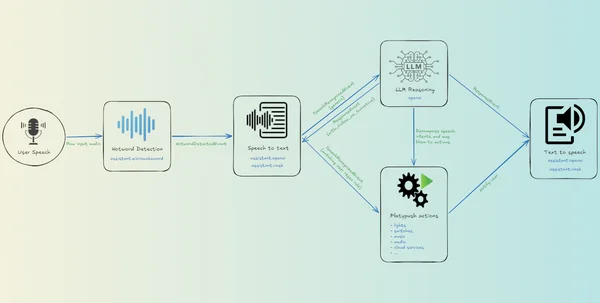
Rebuilding a local voice assistant pipeline

A developer's detailed walkthrough reconstructs a self-hosted voice-assistant pipeline, describing the choices involved in speech capture, recognition, command routing and response delivery. It is a practical counterpoint to cloud-only voice products: components can be swapped and profiled independently.

The value is in the engineering process and tradeoffs, not an independently measured claim that local assistants universally outperform hosted ones. Hardware, model choice and room acoustics affect results.

Publisher-provided image for Rebuilding a local voice assistant pipeline
Image: blog.platypush.tech
Author's walkthrough
Read full briefing Collapse briefing

Detailed briefing

What was done

The author documents the design of a local voice workflow and its integration points. The article provides a concrete starting point for comparing recognition and command-handling components rather than treating voice interaction as a single black box.

How to use the walkthrough

Read the pipeline description, identify the stages and substitute locally available components before measuring end-to-end latency and error rates. Exact hardware and software requirements should be taken from the original article; this briefing does not claim to have reproduced the setup.

04Job market & business pulse

Macro observations

Anthropic's first Nasdaq session ended above its $83 IPO price, but the broader technology market fell. The record financing increases scrutiny of frontier AI revenue quality, inference margins and committed compute spending rather than establishing sustainable profitability.

No new representative November 19 dataset was verified showing a material change in senior or Staff+ software-engineering hiring or compensation. The Sashiko case study provides useful evidence of agent-assisted code review in production, but should not be interpreted as an employment forecast.

Daily briefing

Java4Shell remains the day's most urgent Java security development: researchers demonstrated a critical Base64 decoder memory-corruption flaw on affected x86-64 runtimes, while Red Hat says distribution-specific fixes are being expedited. Equinor continues to investigate an attack against corporate IT, with production reportedly unaffected. Apple attributed its iCloud and Apple Pay disruption to an internal update, but a complete restoration time could not be independently confirmed.

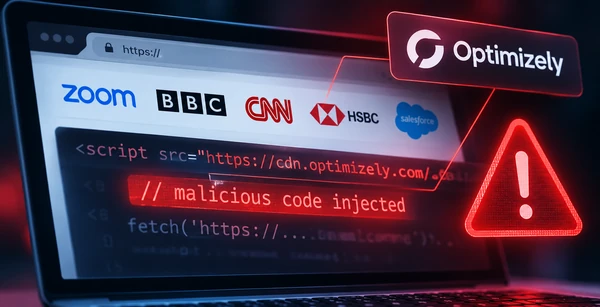
A significant follow-up to yesterday's Optimizely supply-chain compromise adds concrete recovery evidence. Optimizely now confirms that it fixed the exploited Experimentation vulnerability, removed injected code, secured affected accounts and introduced safeguards. Independent research found its observed malicious snippets clean by November 16 at 23:11 UTC; downstream visitor impact remains unknown.

AI announcements from OpenAI and Microsoft and Solid 2.0's stable release remain relevant. Hands-on demonstrations cover JavaScript-free interfaces, formal verification of SQLite migrations and GPU inference education. No new representative senior-engineering hiring dataset was verified.

01Top stories

Primary intelligence

Java4Shell exposes OpenJDK Base64 memory corruption

Monitoring Track this incident

Publisher-provided image for Java4Shell exposes OpenJDK Base64 memory corruption
Image: calif.io

Calif disclosed CVE-2026-114938, a critical memory-corruption vulnerability in the optimized Base64 decoder of affected OpenJDK builds. On certain x86-64 processors with AVX-512 VBMI, malformed padded input can trigger an out-of-bounds heap write. Researchers report pre-authentication remote-code-execution demonstrations against default configurations of Keycloak, Jira, Confluence, Jenkins, Artifactory and PingFederate, with other application-specific chains requiring authentication.

Patches were announced November 17. The vulnerability warrants urgent Java runtime inventory and updates, but the researchers' demonstrations do not prove every Java deployment is exploitable or establish widespread exploitation in the wild.

Why it matters

Critical runtime flaw with urgent patching implications.

via Calif technical investigation
Read full briefing Collapse briefing

Detailed briefing

The optimized intrinsic

The vulnerability is in hand-written HotSpot assembly used for accelerated Base64 decoding. A malformed padded tail can underflow the calculated output length and produce an incorrect vector write mask, allowing data to be written past the destination array before Java rejects the input.

Operational exposure

Application endpoints that decode attacker-controlled Base64, including authentication and upload paths, may expose the vulnerable routine. The researchers report different exploit chains for different products; the actual runtime, CPU and application configuration determine exposure.

Mitigation and uncertainty

Consult the vendor advisory and deploy patched Java builds. Calif also describes disabling the Base64 intrinsic as a temporary mitigation, but this can affect performance and must be tested. There is no verified broad exploitation count.

Limitations & caveats

CPU and runtime dependent; no verified widespread exploitation.

Equinor responds to cyberattack on corporate IT

Investigating Track this incident

Equinor said November 17 it detected an ongoing cyberattack against some internal IT systems and mobilized resources to contain it. Reuters reported disruption to internal applications and, citing an employee, to email. Norway's National Security Authority acknowledged the incident and said it was offering assistance.

The energy company explicitly reported no impact on oil and gas operations or production and no indication of data theft. The distinction is important: a corporate IT incident at a critical energy supplier is serious without implying that industrial systems or energy delivery have been compromised.

Why it matters

An active attack at a major energy supplier warrants close monitoring.

via Primary report
Read full briefing Collapse briefing

Detailed briefing

Verified operational scope

The company described internal IT effects and ongoing containment. Reuters reported internal email disruption, but the affected system inventory, start time and complete duration remain undisclosed.

Production and response

Equinor said its production was unaffected, and Norway's security authority confirmed it was aware of the situation. The attack should not be described as an industrial control-system compromise.

Unknowns

No attacker attribution, intrusion path, confirmed stolen data or final restoration time was established in the reporting reviewed. Additional company statements are needed to determine when containment is complete.

Limitations & caveats

Production unaffected; attacker and scope unknown.

Apple Pay and iCloud disrupted after internal update

Monitoring Track this incident

Apple acknowledged that an internal update caused a November 17 outage affecting services including iCloud and Apple Pay. Reuters reported that many systems had recovered, while Apple was still working to restore the remainder. Downdetector recorded peaks of approximately 2,300 US Apple Pay reports and 1,800 iCloud reports, but those are user submissions rather than verified customer totals.

Apple said the disruption was not caused by a cyberattack. There is no evidence linking it to recent Microsoft, airline or banking failures, despite the incidents occurring close together.

Why it matters

A shared internal change disrupted major consumer services.

via Primary report
Read full briefing Collapse briefing

Detailed briefing

Recovery status

Apple said many services were back online but did not confirm complete restoration in the latest reviewed Reuters report. A status page that does not expose machine-readable incident details cannot independently establish recovery.

Interpreting the numbers

Downdetector figures reflect user reports, not affected accounts or failed transactions. They indicate a visible disruption but should not be extrapolated to a total population.

Engineering implications

A shared internal update can affect multiple customer products. The company attributed this incident to an update, not malicious activity; separate recent outages should not be assigned a common cause.

Limitations & caveats

Full restoration and customer counts unconfirmed.

OpenAI introduces GPT-6.2 Astra and Sol

Publisher-provided image for OpenAI introduces GPT-6.2 Astra and Sol
Image: openai.com

OpenAI announced GPT-6.2 Astra and Sol on November 17, describing improvements in professional work, coding, computer use and efficiency across ChatGPT Work, Codex and the API. The company says both models meet its Critical cybersecurity capability threshold and High biological and chemical threshold. Astra additionally meets its High AI self-improvement threshold.

The company reports stronger performance on exploit-development tasks than its earlier models and says it has tightened controls on higher-risk cybersecurity assistance. These results come from OpenAI's own evaluations and need independent corroboration before being treated as comparative performance facts.

Why it matters

New model capabilities create both developer opportunities and security concerns.

via OpenAI announcement & OpenAI system card
Read full briefing Collapse briefing

Detailed briefing

Model positioning

Astra and Sol represent different capability and efficiency choices for professional tasks and coding agents. Meaningful deployment comparisons should measure successful repository-level tasks, latency, supervision and total cost rather than relying on benchmarks alone.

Cybersecurity assessment

The published system card reports stronger ability to build exploits from known vulnerabilities. OpenAI says this prompted tighter default restrictions and additional vetting for more permissive access.

What remains unproven

Vendor tests do not establish independent model superiority or actual enterprise reliability. The system card is useful evidence of the company's testing methodology and risk classifications, not a substitute for external evaluation.

Limitations & caveats

Vendor-reported evaluations.

Microsoft launches MAI Code 2 and Code 2 Flash

Publisher-provided image for Microsoft launches MAI Code 2 and Code 2 Flash
Image: microsoft.ai

Microsoft introduced MAI Code 2 and MAI Code 2 Flash on November 17, expanding its proprietary AI model offerings for software development. The announcement emphasizes coding capability and scalable economics, while Reuters also reports Microsoft unveiling cybersecurity-oriented models. The move increases competition among model providers serving coding agents and developer platforms.

The relevant engineering comparison is cost per successful task, including tool calls, retries and verification. Microsoft-reported results should not be interpreted as independently established superiority over other coding models.

Why it matters

Competition in coding models may affect cost and reliability.

via Primary report & Reuters
Read full briefing Collapse briefing

Detailed briefing

Why a fast tier matters

Coding agents may require many iterative model calls to inspect repositories, make changes and run tests. A lower-latency model can improve throughput if it remains reliable enough to avoid expensive retries.

Evaluation criteria

Use representative code repair, refactoring and review workloads. Compare correctness, security defects, tool-use behavior, context handling and total cost, not simply advertised per-token pricing.

Evidence boundary

The launch is confirmed by Microsoft's own announcement and Reuters reporting. Independent production measurements and broad adoption data were not established.

Limitations & caveats

Independent benchmarks unavailable.

Solid 2.0 reaches stable with async reactivity

Publisher-provided image for Solid 2.0 reaches stable with async reactivity
Image: solidjs.com

Solid announced version 2.0 stable after a multiyear development effort. The release brings asynchronous operations into its fine-grained reactive graph and introduces server functions, streaming and diagnostics intended to make reactive behavior more inspectable. The project also describes a smaller API and a more integrated approach to coordinating client and server state.

For frontend teams, the important question is how these changes affect data fetching, optimistic updates and debugging. The release announcement establishes availability, not effortless migration or superior performance in every application.

Why it matters

A significant change to frontend asynchronous state architecture.

via Solid release
Read full briefing Collapse briefing

Detailed briefing

Async graph

Solid's fine-grained reactivity updates individual dependencies rather than rerendering entire component trees. Version 2.0 extends that approach to asynchronous values and server interactions.

Server and debugging work

The maintainers describe server functions, streaming and diagnostic features that make reactive state and execution easier to understand, including when agents produce code.

Migration considerations

Existing Solid applications should review API changes and test loading, error recovery and optimistic-update paths. The announcement alone cannot establish production reliability across all application architectures.

Limitations & caveats

First-party claims and migration unknowns.

02Also worth knowing

Rapid scan briefs
Securitystatus.optimizely.com

Optimizely confirms security fix after malicious web-snippet campaign

Optimizely has confirmed that an attacker exploited a vulnerability in its Web Experimentation platform to add malicious JavaScript to customer projects. The company says it fixed the vulnerability, removed injected code, secured affected accounts and added safeguards against unauthorized script delivery. Independent researcher Scott Helme reports that all 188 infected snippets in his observed sample were clean by November 16 at 23:11 UTC.

This is a material remediation update to the November 16 compromise, not a new incident. The number of visitors exposed to card skimming, cookie theft, cryptocurrency-address substitution or iOS exploit delivery remains unknown. Optimizely still labels the incident monitoring.

Monitoring Track this incident

via Optimizely incident statement & Report URI investigation and November 17 update
Read full briefing Collapse briefing

Detailed briefing

Provider confirms vulnerability and corrective actions

Optimizely's November 17 incident notice says an unauthorized party exploited a vulnerability in its experimentation product to add malicious JavaScript to some customer projects. It reports fixing the vulnerability, removing injected code, securing affected accounts and adding protections against unauthorized code delivery. The company has not yet published detailed technical root-cause mechanics or a full postmortem.

Observed cleanup timeline

Scott Helme's follow-up, posted November 17 at 09:17 UTC, reports that all previously infected Optimizely files in his observed set had been clean since November 16 at 23:11 UTC. He also reports several attacker domains were disabled or stopped responding. These observations support removal of the known malicious scripts but do not establish that every cached copy or downstream exposure was cleared.

Residual risk and engineering lessons

The attacker placed code inside the project-level JavaScript served through a trusted experimentation script, so organizations could expose visitors without changes to their own application repositories. The investigation documents wallet substitution, payment skimming, cookie theft and mobile exploit delivery, but it cannot measure all resulting losses. Organizations should review historical third-party script changes, browser security telemetry, content security policy and any affected visitor sessions. Optimizely's incident remains in monitoring.

Cloud & Infrastructurereuters.com

NSA confirms temporary internal network degradation

The NSA said scheduled maintenance caused temporary degradation in some classified internal communications systems. The agency reported that mission-critical capabilities remained operational and its national security defense functions were not impaired.

Reuters could not independently establish the full duration or scope. The agency's narrower statement should not be conflated with reports that the entire classified network was inoperable.

via Original reporting
Read full briefing Collapse briefing

Detailed briefing

Established development

The NSA said scheduled maintenance caused temporary degradation in some classified internal communications systems. The agency reported that mission-critical capabilities remained operational and its national security defense functions were not impaired.

Evidence and implications

Reuters could not independently establish the full duration or scope. The agency's narrower statement should not be conflated with reports that the entire classified network was inoperable. The practical impact should be evaluated against primary documentation and subsequent verified outcomes, rather than inferred from announcement language.

AInews.microsoft.com

Microsoft launches AI Transparency Initiative

Microsoft announced an AI Transparency Initiative at Ignite with more than 40 participating organizations, including Adobe, Accenture, Mastercard and Volvo Cars. It aims to improve governance and visibility into models and agents interacting with enterprise data.

The announcement is a coordination and product-direction commitment, not independent evidence that interoperable controls are already deployed across every participant.

via Original reporting
Read full briefing Collapse briefing

Detailed briefing

Established development

Microsoft announced an AI Transparency Initiative at Ignite with more than 40 participating organizations, including Adobe, Accenture, Mastercard and Volvo Cars. It aims to improve governance and visibility into models and agents interacting with enterprise data.

Evidence and implications

The announcement is a coordination and product-direction commitment, not independent evidence that interoperable controls are already deployed across every participant. The practical impact should be evaluated against primary documentation and subsequent verified outcomes, rather than inferred from announcement language.

Securitymicrosoft.com

Microsoft describes Perception security for agents

Microsoft introduced security capabilities under its Perception initiative, connecting agent identity, access governance and monitoring across its security products. The stated goal is to make autonomous activity visible and governable in enterprise systems.

The effectiveness of these controls depends on deployed integrations, identity boundaries and actual audit coverage; the available claims are first-party.

via Original reporting
Read full briefing Collapse briefing

Detailed briefing

Established development

Microsoft introduced security capabilities under its Perception initiative, connecting agent identity, access governance and monitoring across its security products. The stated goal is to make autonomous activity visible and governable in enterprise systems.

Evidence and implications

The effectiveness of these controls depends on deployed integrations, identity boundaries and actual audit coverage; the available claims are first-party. The practical impact should be evaluated against primary documentation and subsequent verified outcomes, rather than inferred from announcement language.

Securityblog.cloudflare.com

Cloudflare examines Quad9 withdrawal from France

Cloudflare published an analysis of Quad9's withdrawal from France, arguing that legal pressure on recursive DNS operators can affect global infrastructure. The underlying issue concerns jurisdiction, filtering requirements and operators' willingness to serve particular markets.

Cloudflare has a direct industry interest, so its interpretation is commentary rather than an independent legal finding.

via Original reporting
Read full briefing Collapse briefing

Detailed briefing

Established development

Cloudflare published an analysis of Quad9's withdrawal from France, arguing that legal pressure on recursive DNS operators can affect global infrastructure. The underlying issue concerns jurisdiction, filtering requirements and operators' willingness to serve particular markets.

Evidence and implications

Cloudflare has a direct industry interest, so its interpretation is commentary rather than an independent legal finding. The practical impact should be evaluated against primary documentation and subsequent verified outcomes, rather than inferred from announcement language.

AIopenai.com

OpenAI reports cybersecurity work with NATO

OpenAI described providing advanced cybersecurity models to NATO's Communications and Information Agency. The company reports usage reaching up to 300 billion raw input and output tokens per month.

That is a vendor-reported activity measure, not an independently verified reduction in attacks or an assessment of operational effectiveness.

via Original reporting
Read full briefing Collapse briefing

Detailed briefing

Established development

OpenAI described providing advanced cybersecurity models to NATO's Communications and Information Agency. The company reports usage reaching up to 300 billion raw input and output tokens per month.

Evidence and implications

That is a vendor-reported activity measure, not an independently verified reduction in attacks or an assessment of operational effectiveness. The practical impact should be evaluated against primary documentation and subsequent verified outcomes, rather than inferred from announcement language.

03AI & tooling in practice

Hands-on applications
Developer ToolsInteractive demoalloyhtml.com

Alloy CSS builds a no-JavaScript invoice dashboard

A Show HN project presents a detailed fictional invoice dashboard built as a single HTML page using Alloy CSS without JavaScript. The working example includes menus, dialogs, tabs, invoice filters and form controls, with a source link on the page.

It is a useful experiment for evaluating declarative UI and progressive enhancement. The application uses made-up data, so it does not demonstrate backend persistence, authentication or real payment processing.

Working demonstration
Read full briefing Collapse briefing

Detailed briefing

The demonstration

The Ledger invoice example shows navigation, invoice states, a new-invoice dialog, tabbed content and filtering controls. The page explicitly says the app is fictional and links its source.

Reproduction and limitations

Inspect the example's source and Alloy CSS documentation, then test the interaction patterns with JavaScript disabled. The demo does not establish cross-browser accessibility or production readiness; those require separate testing.

Developer ToolsSource codegithub.com/vihren-dev

Belay explores Lean proofs for SQLite migrations

Belay is an experimental repository using Lean 4 to verify properties of SQLite schema migrations and queries. Its implementation and documentation make it an inspectable example of bringing formal methods into routine database maintenance.

The interesting application is checking migration invariants before production rollout. It does not establish complete SQLite semantics or that every schema change can be proved automatically.

Publisher-provided image for Belay explores Lean proofs for SQLite migrations
Image: github.com
Repository
Read full briefing Collapse briefing

Detailed briefing

Technical approach

The project models selected database migration and query behavior in Lean and expresses properties as proof obligations. This allows checking specified invariants rather than relying solely on test examples.

How to investigate

Read the source and examples, then try a small migration with a deliberately violated property. No independent execution was performed here, and unsupported SQL behavior or modeling assumptions may limit practical coverage.

Developer ToolsInteractive tutorialathrael.net

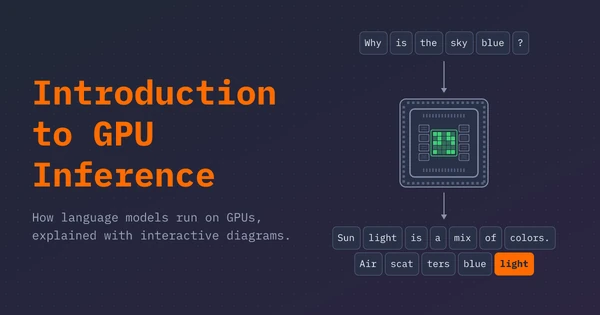
Interactive course teaches GPU inference mechanics

A short GPU inference course uses interactive diagrams to explain inference-serving concepts and their performance tradeoffs. The format lets developers explore ideas such as execution, batching and memory behavior visually rather than relying on static vendor claims.

It is educational material, not a benchmark or production serving framework. Its examples should be validated against real GPU workloads before making deployment decisions.

Publisher-provided image for Interactive course teaches GPU inference mechanics
Image: athrael.net
Working demonstration
Read full briefing Collapse briefing

Detailed briefing

What the course offers

The interactive web course presents inference concepts through diagrams and explanatory material. Readers can use it to develop a mental model of how serving decisions affect system behavior.

Practical use and limits

Work through the diagrams, then profile a representative inference service for latency, throughput and memory usage. The course was inspected online but no hardware benchmark was independently reproduced.

04Job market & business pulse

Macro observations

No new comprehensive, representative US software-engineering labor-market dataset was verified for November 17. Individual AI launches and company announcements do not establish a change in Staff+ hiring, compensation or employment demand.

Microsoft's and OpenAI's model announcements show continued competition on coding capability, cost and agent security. The Java vulnerability and Equinor incident reinforce the importance of software inventories, patching and security engineering. Those are engineering priorities, not direct measures of hiring growth.

Monday evening incident and developer briefing

The most consequential November 16 development is a reported supply-chain attack involving Optimizely-delivered JavaScript used by at least 178 organizations. Researchers described malicious payloads targeting cryptocurrency transactions, payment-card data and browser sessions; most observed scripts were removed, but the full impact remains uncertain. Separately, JPMorgan Chase reported a software defect that delayed transactions involving other banks, illustrating how a failure inside one institution can propagate through payment dependencies without those other banks experiencing independent outages. United Airlines resolved a separate departure-systems disruption, with no verified common cause linking these incidents. Beyond operations, US restrictions concerning overseas access to advanced AI computing, AMD's World Labs acquisition and Alibaba's Qwen4-Max announcement reflect ongoing shifts in infrastructure and model competition. Developer-relevant research includes a patched uBlock Origin vulnerability, Windows coding-tool telemetry observations and Jiff 1.0's stable Rust datetime API. No comprehensive new employment dataset establishes a broad change in senior software-engineering hiring.

01Top stories

Primary intelligence

Optimizely supply-chain attack delivers malware across 178 organizations

Monitoring Track this incident

Publisher-provided image for Optimizely supply-chain attack delivers malware across 178 organizations
Image: report-uri.ghost.io

Scott Helme identified 188 infected Optimizely Web snippets at 178 organizations on November 16, distributing cryptocurrency address substitution, payment-card skimming, cookie theft and iOS exploit payloads. Most observed scripts were cleaned by the final sweep; the full impact is unknown. The practical significance depends on the specific technical mechanism and the independently established scope, rather than headline counts or vendor claims. The remaining evidence gaps are important when assessing operational consequences.

Why it matters

Trusted third-party scripts can create cross-organization security exposure without direct compromises of each customer website.

via Primary investigation & BleepingComputer
Read full briefing Collapse briefing

Detailed briefing

Supply-chain mechanism

The investigation describes malicious code delivered through a third-party experimentation script. Because websites load those scripts in visitors' browsers, an attacker can reach users of multiple unrelated organizations without separately altering each organization's application code.

Observed payloads and uncertainty

The reported behavior included cryptocurrency-address replacement, card skimming, cookie theft and mobile exploit delivery. The researcher reported 188 infected snippets across 178 organizations, but that is not a verified number of compromised visitors. Most observed scripts were cleaned; full exposure and initial access remain uncertain.

Limitations & caveats

Initial access and total affected visitors remain unknown. A separate Optimizely service incident is not proven related.

JPMorgan transaction delays affect other banks before restoration

JPMorgan's on-premises software bug delayed some transactions and interbank Zelle transfers on November 16. Chase reported normal processing Monday evening; other banks and Zelle said their systems remained operational. The practical significance depends on the specific technical mechanism and the independently established scope, rather than headline counts or vendor claims. The remaining evidence gaps are important when assessing operational consequences.

Why it matters

Cross-institution dependencies propagate a single provider's failure into customers' payment workflows.

via Associated Press & Reuters
Read full briefing Collapse briefing

Detailed briefing

Interbank propagation

JPMorgan attributed delayed transaction processing to an internal software defect in on-premises systems. Transfers involving JPMorgan could be delayed even when other banks' internal platforms and the Zelle network remained operational.

Recovery and lessons

Chase said customers retained access to funds, found no evidence of a cyberattack and subsequently reported normal processing. The detailed defect and total customer impact remain uncertain. Payment monitoring should distinguish bank uptime from the state of transactions crossing institutional boundaries.

Limitations & caveats

Exact root cause and affected population remain unclear; no shared cause with other outages is established.

US tightens controls on remotely accessed advanced AI chips

The Commerce Department issued an interim rule addressing advanced AI chips accessed through overseas data centers, including additional licensing requirements in Singapore, Thailand, Malaysia, Indonesia and Brazil. The practical significance depends on the specific technical mechanism and the independently established scope, rather than headline counts or vendor claims. The remaining evidence gaps are important when assessing operational consequences.

Why it matters

Compute location and remote access become important compliance considerations for cloud providers and AI infrastructure operators.

via BIS announcement & Reuters
Read full briefing Collapse briefing

Detailed briefing

What the policy targets

The reported Commerce Department measure addresses remote access to advanced US AI accelerators through overseas data centers. That differs from rules concerned solely with shipping physical chips abroad.

Operational implications

Cloud providers may need to examine customer access, licensing and compute location. The specific exemptions and enforcement obligations depend on the rule text; it should not be interpreted as a universal ban on foreign GPU rentals.

Limitations & caveats

Implementation details and enforcement remain uncertain; the rule is not a blanket prohibition on all cloud compute.

AMD completes acquisition of World Labs

Publisher-provided image for AMD completes acquisition of World Labs
Image: newsroom.amd.com

AMD confirmed the World Labs acquisition on November 16; its SEC filing reports a November 13 closing. Fei-Fei Li joins as executive vice president and chief scientist. The practical significance depends on the specific technical mechanism and the independently established scope, rather than headline counts or vendor claims. The remaining evidence gaps are important when assessing operational consequences.

Why it matters

Spatial AI research could inform AMD accelerator and systems design beyond text generation.

via AMD announcement & SEC filing
Read full briefing Collapse briefing

Detailed briefing

Transaction and research focus

AMD announced completion of its World Labs acquisition on November 16; the cited SEC filing identifies November 13 as the closing date. The company gains research leadership associated with spatial AI.

What remains to be demonstrated

Spatial AI involves geometry and representations of environments, with potential applications in robotics and simulation. The transaction does not itself establish shipping products, accelerator performance gains or commercial adoption.

Limitations & caveats

Commercial impact and spatial inference performance are not yet established.

Patched uBlock Origin universal XSS exposes extension trust boundary

Publisher-provided image for Patched uBlock Origin universal XSS exposes extension trust boundary
Image: iter.ca

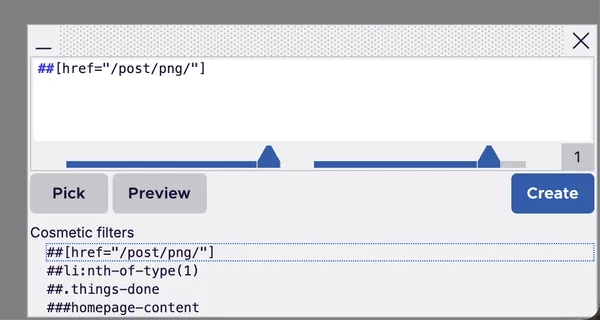
A Firefox Manifest V2 uBlock Origin element-picker vulnerability allowed malicious websites to trick users into adding trusted filters with script execution on other websites. It was patched. The practical significance depends on the specific technical mechanism and the independently established scope, rather than headline counts or vendor claims. The remaining evidence gaps are important when assessing operational consequences.

Why it matters

Browser extension UI must isolate untrusted website content from privileged configuration.

via Research write-up & Security advisory
Read full briefing Collapse briefing

Detailed briefing

The extension trust boundary

The disclosed Firefox Manifest V2 uBlock Origin vulnerability involved untrusted website content influencing a privileged element-picker configuration workflow. With user interaction, the flaw could lead to script execution across sites.

Status and practical response

The vulnerability was patched. The advisory does not establish widespread exploitation. Extension developers should treat page-derived input as untrusted, and users should keep the extension updated.

Limitations & caveats

Requires user interaction; no widespread exploitation established.

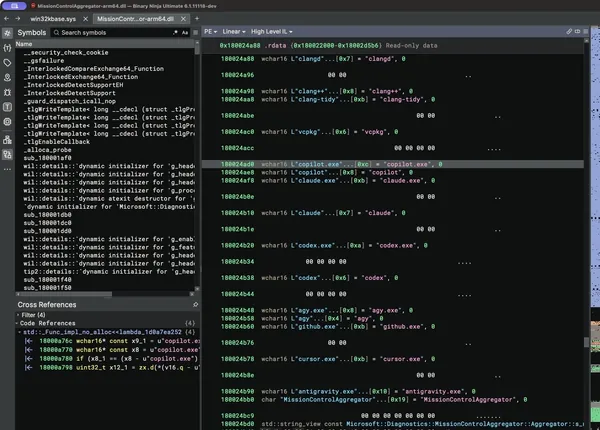
Windows 11 diagnostic events reveal coding-agent usage telemetry

Publisher-provided image for Windows 11 diagnostic events reveal coding-agent usage telemetry
Image: xusheng.dev

Reverse engineering found Windows diagnostics recording the presence of developer tools including Claude, Codex and Cursor. Optional diagnostics in tested configurations queued usage metadata for upload, without observed prompts or source code. The practical significance depends on the specific technical mechanism and the independently established scope, rather than headline counts or vendor claims. The remaining evidence gaps are important when assessing operational consequences.

Why it matters

Usage metadata may expose professional development workflows even when code content is not collected.

via Independent investigation
Read full briefing Collapse briefing

Detailed briefing

What the researcher observed

An independent Windows 11 investigation found diagnostic events indicating use of coding agents and developer tools, including Claude, Codex and Cursor, in tested configurations.

What was not shown

The report did not establish collection of prompts or source repositories, nor equivalent behavior on every Windows installation. Application-use metadata can still reveal development practices, so privacy-sensitive organizations should examine diagnostic settings and actual endpoint telemetry.

Limitations & caveats

Findings apply to specific tested builds and settings, not all Windows installations.

Alibaba announces Qwen4-Max with new security safeguards

Alibaba unveiled a 2.4-trillion-parameter flagship model, reporting improved secure-code results and lower task costs in its own tests; smaller open-weight Qwen4 variants are planned. The practical significance depends on the specific technical mechanism and the independently established scope, rather than headline counts or vendor claims. The remaining evidence gaps are important when assessing operational consequences.

Why it matters

Security-aware coding capabilities and competition from Chinese model providers are strategically important.

via Reuters
Read full briefing Collapse briefing

Detailed briefing

Vendor announcement

Alibaba announced Qwen4-Max as a flagship model with claimed improvements in secure-code generation and task economics. The cited performance figures are vendor-reported rather than independently reproduced.

How to evaluate it

Useful comparisons require realistic repository-level tasks, correctness and security outcomes, latency and cost per successful task. The flagship should not be labeled open source merely because other Qwen models distribute weights; licensing and training transparency are separate questions.

Limitations & caveats

Benchmarks and safety claims are company-reported; planned open weights are not a released open-source training stack.

Jiff 1.0 stabilizes Rust timezone-aware datetime library

Publisher-provided image for Jiff 1.0 stabilizes Rust timezone-aware datetime library
Image: github.com

Andrew Gallant released Jiff 1.0 November 15, with civil/zoned time representations and DST-safe calendar operations; it already has adoption in Cargo, uv and Nushell. The practical significance depends on the specific technical mechanism and the independently established scope, rather than headline counts or vendor claims. The remaining evidence gaps are important when assessing operational consequences.

Why it matters

Mature timezone handling reduces persistent production correctness risks.

via Author's release essay & Repository
Read full briefing Collapse briefing

Detailed briefing

Why datetime semantics matter

Jiff 1.0 provides stable Rust APIs distinguishing civil calendar time from time tied to a zone. Calendar-day arithmetic can differ from adding 24 elapsed hours across daylight-saving transitions.

Migration considerations

The maintainer cites use in Cargo, uv and Nushell. Teams should test ambiguous local times, recurring schedules, serialization compatibility and timezone-data behavior before replacing existing libraries.

Limitations & caveats

Migration and timezone-data compatibility need assessment.

02Also worth knowing

Rapid scan briefs
Cloud & Infrastructurereuters.com

United Airlines resolves separate departure-systems outage

A technology failure delayed departing United flights for about an hour on November 16; the airline confirmed resolution, with no impact on airborne or United Express flights and no established link to the FAA incident. This is a scoped development rather than evidence of a broader industry trend; practical consequences depend on deployment, adoption and independently verified results.

via Reuters
Read full briefing Collapse briefing

Detailed briefing

What is established

A technology failure delayed departing United flights for about an hour on November 16; the airline confirmed resolution, with no impact on airborne or United Express flights and no established link to the FAA incident.

Interpretation and limitations

The reported development is worth monitoring, but the cited source does not establish every downstream outcome. Verify exact versions, access conditions and operational effects before relying on it in production or treating it as an industry-wide change.

Developer Toolsharmonic.fun

Aristotle introduces AI-assisted Rust formal verification

Harmonic announced Rust support for formal verification against specified properties, with vendor-reported examples that require independent assessment. This is a scoped development rather than evidence of a broader industry trend; practical consequences depend on deployment, adoption and independently verified results.

via Harmonic announcement
Read full briefing Collapse briefing

Detailed briefing

What is established

Harmonic announced Rust support for formal verification against specified properties, with vendor-reported examples that require independent assessment.

Interpretation and limitations

The reported development is worth monitoring, but the cited source does not establish every downstream outcome. Verify exact versions, access conditions and operational effects before relying on it in production or treating it as an industry-wide change.

Developer Toolsopencode.ai

OpenCode Browse draws developer attention

OpenCode Browse appeared in the HN front-page listings; evaluate its security boundaries and capabilities before production use. This is a scoped development rather than evidence of a broader industry trend; practical consequences depend on deployment, adoption and independently verified results.

via OpenCode
Read full briefing Collapse briefing

Detailed briefing

What is established

OpenCode Browse appeared in the HN front-page listings; evaluate its security boundaries and capabilities before production use.

Interpretation and limitations

The reported development is worth monitoring, but the cited source does not establish every downstream outcome. Verify exact versions, access conditions and operational effects before relying on it in production or treating it as an industry-wide change.

Business & Marketswsj.com

US reportedly preparing AI national champions designation

A reported initiative could offer export support and financing to selected US AI companies; no final designation was verified. This is a scoped development rather than evidence of a broader industry trend; practical consequences depend on deployment, adoption and independently verified results.

via Wall Street Journal
Read full briefing Collapse briefing

Detailed briefing

What is established

A reported initiative could offer export support and financing to selected US AI companies; no final designation was verified.

Interpretation and limitations

The reported development is worth monitoring, but the cited source does not establish every downstream outcome. Verify exact versions, access conditions and operational effects before relying on it in production or treating it as an industry-wide change.

Jobs & Laborbusinessinsider.com

AI coding changes engineering collaboration expectations

Interviews with employers suggest greater emphasis on judgment, communication and customer context, but anecdotes do not establish an industry-wide hiring shift. This is a scoped development rather than evidence of a broader industry trend; practical consequences depend on deployment, adoption and independently verified results.

via Business Insider
Read full briefing Collapse briefing

Detailed briefing

What is established

Interviews with employers suggest greater emphasis on judgment, communication and customer context, but anecdotes do not establish an industry-wide hiring shift.

Interpretation and limitations

The reported development is worth monitoring, but the cited source does not establish every downstream outcome. Verify exact versions, access conditions and operational effects before relying on it in production or treating it as an industry-wide change.

Developer Toolsgithub.blog

GitHub Copilot models scheduled for December retirement

GitHub will retire selected Copilot models on December 14; audit pinned model choices in coding workflows. This is a scoped development rather than evidence of a broader industry trend; practical consequences depend on deployment, adoption and independently verified results.

via GitHub changelog
Read full briefing Collapse briefing

Detailed briefing

What is established

GitHub will retire selected Copilot models on December 14; audit pinned model choices in coding workflows.

Interpretation and limitations

The reported development is worth monitoring, but the cited source does not establish every downstream outcome. Verify exact versions, access conditions and operational effects before relying on it in production or treating it as an industry-wide change.

Securitygithub.blog

GitHub AI Scan gains REST API management

Organizations can manage AI Scan settings through APIs, useful for repository security policy automation. This is a scoped development rather than evidence of a broader industry trend; practical consequences depend on deployment, adoption and independently verified results.

via GitHub changelog
Read full briefing Collapse briefing

Detailed briefing

What is established

Organizations can manage AI Scan settings through APIs, useful for repository security policy automation.

Interpretation and limitations

The reported development is worth monitoring, but the cited source does not establish every downstream outcome. Verify exact versions, access conditions and operational effects before relying on it in production or treating it as an industry-wide change.

AI Coding Toolsgithub.blog

Gemini 4 Hydrogen remains the newest confirmed Copilot model addition

The November 13 release targets fast agentic coding; no independently validated performance comparison was identified this morning. This is a scoped development rather than evidence of a broader industry trend; practical consequences depend on deployment, adoption and independently verified results.

via GitHub changelog
Read full briefing Collapse briefing

Detailed briefing

What is established

The November 13 release targets fast agentic coding; no independently validated performance comparison was identified this morning.

Interpretation and limitations

The reported development is worth monitoring, but the cited source does not establish every downstream outcome. Verify exact versions, access conditions and operational effects before relying on it in production or treating it as an industry-wide change.

Researcharxiv.org

AI-agent workflow study finds prompt-injection defenses rarely specified

A September empirical paper analyzing 1,248 GitHub agentic-workflow files found explicit prompt-injection defenses in only 9.4% of labeled workflows; useful background, not a new release. This is a scoped development rather than evidence of a broader industry trend; practical consequences depend on deployment, adoption and independently verified results.

via Research paper
Read full briefing Collapse briefing

Detailed briefing

What is established

A September empirical paper analyzing 1,248 GitHub agentic-workflow files found explicit prompt-injection defenses in only 9.4% of labeled workflows; useful background, not a new release.

Interpretation and limitations

The reported development is worth monitoring, but the cited source does not establish every downstream outcome. Verify exact versions, access conditions and operational effects before relying on it in production or treating it as an industry-wide change.

03AI & tooling in practice

Hands-on applications
Developer ToolsSource codegithub.com/aryamandarda

tamserve: serving live multi-camera object tracking with shared GPU inference

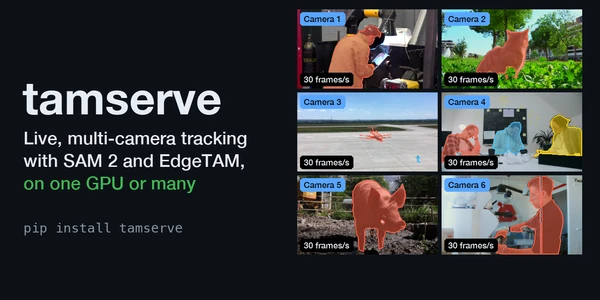
A developer published tamserve, an Apache-2.0 Python serving layer for SAM 2 and EdgeTAM that shares one model instance across live camera feeds instead of allocating a separate model for every stream. The repository contains executable camera-loop examples, tests, benchmarks, and recorded demonstrations. On the author's RTX 4090 tests, eight-camera EdgeTAM tracking consumed 2.2 GB of GPU memory versus 8.6 GB for the baseline, with similar segmentation accuracy. This is a practical architecture example for video analytics, robotics and streaming computer vision; the measurements have not been independently reproduced.

Publisher-provided image for tamserve: serving live multi-camera object tracking with shared GPU inference
Image: github.com
Source, examples and benchmarks
Read full briefing Collapse briefing

Detailed briefing

What the demonstration shows

The author documents live object masks across multiple camera streams and supplies a short recorded six-camera demonstration. An engine accepts frames from each stream and returns per-object segmentation masks, maintaining tracking state across calls. It supports box, click and mask prompts, with additional named-object tracking through a detector.

The serving architecture

The important idea is separating model serving from camera capture. Multiple streams share one GPU-resident model, and work can be batched rather than spawning a separate model per camera. The project includes code, tests and a benchmark directory; its comparison uses EdgeTAM on an RTX 4090 and reports substantial GPU memory savings. These are author-reported measurements, not independently reproduced results.

Reproduction and constraints

The documented Python API uses pip install tamserve and a frame-processing loop that passes the newest frame from each camera to engine.step(). The author recommends an NVIDIA GPU for live performance, though CPU experimentation is possible. Real-world results will depend on resolution, object count, camera count, decoding, GPU and tracking conditions.

Developer ToolsTechnical writeupblog.antonio.cx

lend: local approval for remote coding agents without sharing credentials

A November 13 technical writeup documents a remote-agent workflow using herdr, Ovis and lend. Claude Code and Codex run on remote virtual machines, while the developer keeps authenticated GitHub and cloud CLIs, SSH keys and 1Password credentials on a local laptop. A forwarded SSH-agent socket carries restricted command requests back to the laptop, where policy and biometric approval govern execution. The post includes concrete configuration, MCP integration, connection-recovery handling and a security analysis. It reduces credential copying but is not a sandbox for approved local commands.

Publisher-provided image for lend: local approval for remote coding agents without sharing credentials
Image: blog.antonio.cx
Hands-on technical walkthroughalso Source repository
Read full briefing Collapse briefing

Detailed briefing

The workflow

The author runs coding agents in disposable remote VMs and manages them through a terminal multiplexer and a browser or phone interface. Rather than copying credentials to the remote machines, lend forwards restricted requests through a proxy SSH-agent socket. The agent can request an authenticated GitHub CLI operation and receive the output after local approval.

Policies, MCP and reconnects

The writeup includes policy rules for executable paths, argument prefixes, SSH key fingerprints and approval requirements. Claude Code can call a local-command tool through lend's MCP server. A stable socket symlink is used so long-running agent sessions can recover after SSH reconnects. The author also documents leases, logs and hooks for remote permission prompts.

Threat model and caveats

Credentials remain on the laptop, but approved commands execute with the laptop user's permissions. Allowing a shell, interpreter or secret-printing command can defeat the intended boundary. Caller descriptions from the VM are untrusted, and anyone with access to the forwarded socket can submit requests subject to policy and approval. The tool is early-stage and its described security properties have not been independently audited here.

Developer ToolsInteractive demothingstudio.net

ThingStudio: visual flows and AI-generated MicroPython for microcontrollers

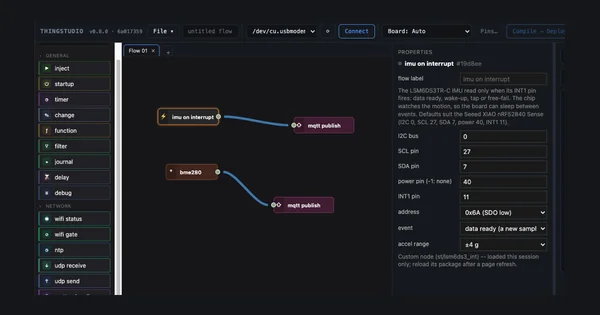
Mike Karliner demonstrated ThingStudio, an Apache-2.0 beta project that lets developers assemble event-driven microcontroller workflows visually and compile them into MicroPython. The site includes a browser demo, hardware examples and an AI-authoring approach: an assistant writes a structured flow, runs the compiler, corrects pin or node errors, and leaves a visual program a human can inspect. Supported targets include ESP32 and Raspberry Pi Pico families. Unlike a remote dashboard, the compiled flow runs on the board after deployment. Hardware coverage and usability are primarily maintainer-tested.

Publisher-provided image for ThingStudio: visual flows and AI-generated MicroPython for microcontrollers
Image: thingstudio.net
Interactive demo and technical overviewalso Browser editor demo
Read full briefing Collapse briefing

Detailed briefing

What the demonstration contains

The site demonstrates a blinking LED flow and lets readers try the visual editor in a browser without installing hardware tools. It also documents practical chains involving buttons, timers, sensors, MQTT and LEDs. Flow files are plain JSON, and the editor can compile them into MicroPython for deployment over USB or WiFi.

Why the AI workflow is different

Instead of asking an assistant for a monolithic script, the documented workflow asks it to produce a flow file using predefined nodes and connections. The compiler checks board definitions and pin conflicts, returning errors that can be corrected before deployment. The human can inspect the generated flow visually, which provides a reviewable intermediate representation between a natural-language request and device code.

Reproduction and limitations

The browser demo is available without an account; deploying to hardware requires a compatible MicroPython board and local setup. The author reports testing several ESP32, RP2040, RP2350, nRF52840 and STM32 boards. The project is explicitly beta, with incomplete independent hardware testing and potential rough edges in setup and documentation.

04Job market & business pulse

Macro observations

No new comprehensive US software-engineering employment release establishes a change in senior or Staff+ hiring. AMD's World Labs acquisition signals strategic AI investment, while chip restrictions and financial stability risks complicate the business outlook. The day's supply-chain and banking incidents emphasize operational security and reliability, not a measured hiring trend.

Sunday morning briefing

The day's strongest developments focused on AI financial risk, the economics of agent infrastructure, and open-weight speech models rather than a major new frontier coding model. Federal Reserve survey responses highlighted exposure to AI investment, LangChain disclosed a major financing round, Salesforce released SOV-Transcribe-1, and World Labs introduced spatial-model development tools. The Sunday edition also revisited material Friday news rather than padding a quieter weekend.

01Top stories

Primary intelligence

Federal Reserve identifies AI as the leading perceived financial-stability risk

The Federal Reserve's November 13 Financial Stability Report showed AI-related risks as the most frequently cited concern among surveyed financial-system contacts. Respondents raised concerns about infrastructure investment, cyberattacks, interconnected financing and disappointment in AI earnings.

Why it matters

AI investment increasingly carries credit-market and infrastructure implications that extend into startup financing and hiring.

via Federal Reserve report & Reuters
More context Collapse briefing
Limitations & caveats

The reported 87% share indicates respondents identifying a risk, not a calculated probability of collapse.

LangChain raises $300 million at a $3 billion valuation

Publisher-provided image for LangChain raises $300 million at a $3 billion valuation
Image: langchain.com

CapitalG led LangChain's latest financing, with GIC, DFJ Growth, IVP, Sapphire Ventures and other investors participating. Its core proposition is model-agnostic agent operations, evaluation, governance and deployment.

Why it matters

As labs ship capable agent frameworks, independent platforms compete on observability, control and reliability.

via LangChain announcement & TechCrunch
More context Collapse briefing
Limitations & caveats

Customer counts come from the company and the fundraising valuation does not establish profitability.

Salesforce releases SOV-Transcribe-1, an Apache-2.0 open-weight speech model

Publisher-provided image for Salesforce releases SOV-Transcribe-1, an Apache-2.0 open-weight speech model
Image: huggingface.co

The mixture-of-experts model has 26.6 billion total and approximately 4.6 billion active parameters. It supports transcription style instructions, context hints, multilingual ASR and recognition of challenging entities such as addresses and code symbols.

Why it matters

More accurate entity transcription could improve voice-driven agents and developer tools.

via Salesforce technical post & Model card
More context Collapse briefing
Limitations & caveats

It is non-streaming, substantial to host, and public benchmark claims require real-world validation.

Nvidia's crisis expands into export-control scrutiny

Publisher-provided image for Nvidia's crisis expands into export-control scrutiny
Image: nvidianews.nvidia.com

Following Nvidia's confirmed CEO transition, renewed reporting examined alleged chip diversion through intermediaries and overseas compute access.

Why it matters

Future restrictions could involve cloud access and hardware location verification as well as direct sales.

via Washington Post reporting & Nvidia statement
More context Collapse briefing
Limitations & caveats

Reports of investigations are not judicial findings; allegations against intermediaries must remain attributed.

World Labs opens its next-generation spatial model to developers

Publisher-provided image for World Labs opens its next-generation spatial model to developers
Image: worldlabs.ai

World Labs announced Atlas tools and APIs for generating and reconstructing spatial environments.

Why it matters

Interactive spatial models could shorten development cycles for 3D game scenes, simulation, robotics and design.

via World Labs release index
More context Collapse briefing
Limitations & caveats

Visually convincing scenes are not automatically production-ready editable meshes with good topology or physics.

AI infrastructure's physical resource requirements are becoming a more important constraint

A Reuters analysis explored data center demand for copper, aluminum, steel and associated electrical equipment, emphasizing grid work and substations.

Why it matters

Power and industrial supply constraints may limit compute expansion independently of GPU availability.

via Reuters analysis
More context Collapse briefing
Limitations & caveats

Material requirements are estimates sensitive to energy capacity, project completion and engineering choices.

02Also worth knowing

Rapid scan briefs
Developer Toolsgithub.com

llama.cpp 1.0 milestone

Maintainers targeted November 13 for API cleanup and a milestone release. The original report could not verify that the final 1.0 tag shipped, so treat it as a target rather than a confirmed published release.

via Maintainer discussion
AI & Modelshuggingface.co

Local speech inference

A community MLX 4-bit conversion of SOV-Transcribe-1 enables experimentation on sufficiently equipped Apple Silicon Macs; its documented validation is narrow.

via MLX model
AI & Modelshuggingface.co

Speculative decoding

Salesforce's DFlash draft model claims around 2–3× acceleration for some single-request speech workloads, subject to model, hardware and recording length.

via DFlash model
AI & Agentsgithub.blog

GitHub Copilot

Gemini 4 Hydrogen's addition to Copilot was a notable model option, but the report found no independent weekend coding-agent comparison.

via GitHub November changelog
Business & Marketsanthropic.com

Anthropic IPO

Anthropic's announced IPO roadshow remained a prospective test of public-market demand, with no confirmed pricing outcome in this briefing window.

via Anthropic announcements
Cloud & Infrastructurefaa.gov

FAA infrastructure failure

A reported router installation fault disrupted communications, contributing to a nationwide ground stop. The report treated this as infrastructure reliability news rather than an AI story.

via FAA official updates

03AI & tooling in practice

Hands-on applications

04Job market & business pulse

Macro observations

No material weekend release established a shift in nationwide software-engineering hiring, senior or Staff+ pay, remote-work patterns or layoffs. LangChain's funding illustrates continued investor interest in agent infrastructure while the Federal Reserve survey highlights financing risks.

November 14 briefing · Reconstructed

The Saturday briefing covered agent-led commerce, Nvidia's leadership fallout, a multi-service Microsoft 365 outage, Google Gemini 4 Hydrogen, AWS Emulator, Amazon's reported product graph effort, and the risks accompanying AI infrastructure spending. The eight shorter items and three tools below follow the original briefing's topic list.

01Top stories

Primary intelligence

AI agents are becoming actual customers, not just shopping assistants

Publisher-provided image for AI agents are becoming actual customers, not just shopping assistants
Image: blog.google

The move from assisting shoppers toward directly acting on their behalf is increasing pressure for agent-compatible merchant discovery, identity, product data, permissions, and checkout infrastructure.

Why it matters

Developers building commerce systems may need to expose products and transaction policies to non-human clients.

via Google agentic commerce resources & Amazon retail updates
More context Collapse briefing
Limitations & caveats

Agent purchases still require merchant support and secure user authorization; adoption remains uneven.

Nvidia's leadership crisis is now affecting the broader AI infrastructure trade

Publisher-provided image for Nvidia's leadership crisis is now affecting the broader AI infrastructure trade
Image: nvidianews.nvidia.com

After Nvidia confirmed Jensen Huang's resignation, investors and suppliers evaluated the execution and governance risk facing its accelerator roadmap.

Why it matters

Nvidia's position in the AI compute supply chain magnifies the implications of uncertainty at the company.

via Company announcement & SEC 8-K
More context Collapse briefing
Limitations & caveats

There is no basis to infer widespread project cancellations solely from leadership news.

Microsoft 365 suffers a major global outage

Publisher-provided image for Microsoft 365 suffers a major global outage
Image: status.bath.ac.uk

A Microsoft 365 incident affected enterprise communications and collaboration services including Outlook/Exchange, Teams and SharePoint, with recovery unfolding during Friday.

Why it matters

It demonstrates common failure modes of platforms built on shared identity, routing and control-plane dependencies.

via Service health (tenant-specific) & Third-party incident timeline
More context Collapse briefing
Limitations & caveats

Scope and exact recovery times differ by region and tenant; consult Microsoft service health for tenant-specific impact.

Google releases Gemini 4 Hydrogen for faster agentic coding

Publisher-provided image for Google releases Gemini 4 Hydrogen for faster agentic coding
Image: blog.google

Google introduced a fast Gemini 4 variant optimized for coding, agent workflows and larger orchestration systems.

Why it matters

Teams using multiple agents may trade some single-step capability for lower latency and cost.

via Google announcement & Model information
More context Collapse briefing
Limitations & caveats

Vendor benchmark comparisons require independent tests on real tasks.

AWS Emulator offers local infrastructure testing for coding agents

Publisher-provided image for AWS Emulator offers local infrastructure testing for coding agents
Image: aws.amazon.com

AWS Emulator runs AWS-compatible API calls on a local machine, enabling agents and integration tests to iterate without cloud deployments.

Why it matters

The faster feedback loop is especially relevant to automated debugging, infrastructure tests and CI.

via AWS launch & AWS documentation
More context Collapse briefing
Limitations & caveats

It is not an IAM security test and has service-specific fidelity limits.

Amazon is reportedly exploring a global product-data system to defend its shopping business

Reporting described internal Amazon work on a broad World Product Graph catalog concept to improve product discovery and agent shopping.

Why it matters

High-quality product identity, stock and seller metadata could be a powerful competitive asset in AI shopping.

via Reuters report
More context Collapse briefing
Limitations & caveats

Amazon described the leaked document as outdated; no product launch is confirmed.

AI infrastructure investment continues despite financing concerns

Large AI compute, data-center and power commitments continued alongside increased concern about credit exposure and overbuilding.

Why it matters

Construction pipelines matter for semiconductor orders, cloud spending, electricity demand and future hiring.

via Federal Reserve report & Reuters analysis
More context Collapse briefing
Limitations & caveats

Announced projects and financing commitments are not the same as built capacity or earned returns.

02Also worth knowing

Rapid scan briefs
Securitygithub.blog

GitHub AI security

The briefing surveyed GitHub's work on security checks for AI-assisted development, including secret scanning and workflow safety.

via GitHub security changelog
AI & Modelshuggingface.co

Speech-model evaluation

New speech-transcription claims raise the importance of tests on accents, code symbols, names, background noise, and real latency.

via SOV-Transcribe-1 benchmarks

03AI & tooling in practice

Hands-on applications

04Job market & business pulse

Macro observations

AI infrastructure capital spending remains substantial, but the Saturday briefing found no verified new broad software-engineering hiring report. Nvidia leadership and compute financing questions are material industry risks, not proof of a near-term change in senior hiring.

Morning briefing · Reconstructed from original topics

The November 13 briefing combined Nvidia's leadership upheaval, strong semiconductor manufacturing earnings, a lawsuit targeting frontier AI, the labor implications of AI, Anthropic's enterprise platform push and AMD's deeper quantum-computing collaboration. The entries below retain all topics from the original report, with newly verified links where available.

01Top stories

Primary intelligence

Nvidia's leadership crisis continues after Jensen Huang departure

Publisher-provided image for Nvidia's leadership crisis continues after Jensen Huang departure
Image: nvidianews.nvidia.com

Nvidia's board and interim CEO Colette Kress faced investor questions after the company's November 12 confirmation of Huang's immediate resignation.

Why it matters

Chipmakers, cloud customers and investors depend on predictable roadmaps and executive continuity at Nvidia.

via Nvidia announcement & SEC filing
More context Collapse briefing
Limitations & caveats

The company confirmed the transition, but investigative and reputational claims need careful attribution.

Applied Materials earnings point to sustained AI chip investment

Applied Materials reported record fiscal fourth-quarter revenue of $10.41 billion, up 53% year over year, with investment in semiconductor manufacturing a major driver.

Why it matters

Equipment orders signal spending across the chip-production supply chain, not just at accelerator vendors.

via Earnings release & SEC exhibit
More context Collapse briefing
Limitations & caveats

Quarterly earnings reflect current demand; they do not guarantee that today's AI capacity plans will all become profitable.

Lawsuit seeks a halt to frontier-model development

A coalition of nonprofits sued OpenAI, Google, Meta, Anthropic, and SpaceX's AI division in California, alleging that frontier-model development should be restrained.

Why it matters

The filing tests how consumer and unfair-competition law might affect future AI training and deployment.

via Reuters reporting
More context Collapse briefing
Limitations & caveats

A lawsuit and allegations are not judicial findings; no injunction was established by filing the complaint.

Federal Reserve governor warns AI could cause serious labor disruption

Publisher-provided image for Federal Reserve governor warns AI could cause serious labor disruption
Image: federalreserve.gov

Governor Michael Barr argued that AI may be complementing workers today but could produce serious short-term job disruption if adoption accelerates.

Why it matters

This is a policy-level warning relevant to developer hiring, entry-level roles, re-skilling and long-term productivity.

via Federal Reserve speech
More context Collapse briefing
Limitations & caveats

Barr acknowledged the extent of actual labor displacement remains limited and highly uncertain.

Anthropic expands its enterprise agent and productivity ambitions

Publisher-provided image for Anthropic expands its enterprise agent and productivity ambitions
Image: platform.claude.com

Anthropic announced self-hosted Claude Managed Agents, allowing customers to host agent services, sessions and history on their own infrastructure rather than only using managed sandboxes.

Why it matters

Enterprise adoption depends on governance, data control, and operational reliability, not merely model scores.

via Claude Platform release notes & Anthropic news
More context Collapse briefing
Limitations & caveats

Self-hosted managed agents were announced with access through customer account teams; this is not general availability for every developer.

AMD and PsiQuantum broaden partnership on hybrid computing

AMD and PsiQuantum announced deeper co-design work for fault-tolerant quantum computing infrastructure combining AMD CPUs, GPUs, software and PsiQuantum's silicon-photonics platform.

Why it matters

Large-scale quantum systems will need tightly coupled classical compute for error correction and hybrid applications.

via Partnership announcement & Reuters
More context Collapse briefing
Limitations & caveats

Commercially useful quantum-scale deployments remain future-facing; planned cooperation is not a delivered machine.

02Also worth knowing

Rapid scan briefs
Securitygithub.blog

GitHub secret scanning adds Cloudflare service tokens

GitHub's secret scanning now detects Cloudflare Access service tokens to help flag inadvertently published credentials.

via GitHub changelog
Developer Toolsgithub.blog

GitHub Actions announces ARM32 runner retirement

GitHub announced that Windows and Linux ARM32 job execution support will end on December 8, 2026.

via November GitHub changelog
Technologywired.com

Synchron pauses trials of its second-generation brain-computer interface

Reporting says the device did not perform as expected in initial participants; the company is redesigning its hardware.

via WIRED reporting
Jobs & Laborhiringlab.indeed.com

Specialized AI engineer pay remains a labor-market bright spot

The briefing discussed compensation premiums for certain AI-engineering specializations. This should not be generalized to all software roles without comparable market data.

via Indeed Hiring Lab context
Jobs & Laborcensus.gov

Business formation improves while hiring intent remains mixed

The report contrasted rising US business applications with softer hiring-intent applications; the former does not necessarily create immediate salaried roles.

via US Census business formation statistics

03AI & tooling in practice

Hands-on applications
Securitygithub.blog

GitHub Secret Scanning with Cloudflare token detection

Inspect the Cloudflare Access service-token detector in GitHub secret scanning if using Cloudflare Access service credentials.

Publisher-provided image for GitHub Secret Scanning with Cloudflare token detection
Image: github.blog
Detector release

04Job market & business pulse

Macro observations

Applied Materials' earnings and AI infrastructure spending suggest continued demand for semiconductors, while Federal Reserve remarks highlight uncertainty about how quickly AI gains translate into job displacement. Distinguish sector-specific hiring resilience from the broader software labor market.